What is green power?
Green power is a term used to describe electricity generated from renewable resources,
such as solar, wind, geothermal, small hydro, and biomass, which have the least amount of environmental
impact. These "environmental friendly" resources, provide the consumer an alternative means to conventional
electricity generated from coal, nuclear power, natural gas, oil, and large-scale hydro plants.
Currently, coal power plants produce the largest share of the world's energy needs. However,
this inexpensive method causes the most damage to the environment in the form of toxic emissions.
These toxic emissions, sulfur dioxide and nitrogen oxides, combined with water cause acid rain and
attribute to global warming.
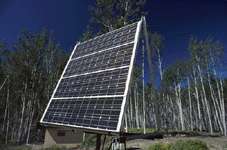 Solar
Solar
The sun provides an endless supply of energy daily. Solar energy uses the sun's radiation to produce
electricity in two ways, solar thermal and photovoltaic (PV) applications. Solar thermal is a collection
of the sun's radiant energy to produce heat, generally for water heating. Photovoltaic systems convert
the sunlight to electricity through the use of photovoltaic cells or modules. This technology introduced
in the early 1970's for the US space program has decreased significantly in cost from approximately
$300 to about $4 per watt. Photovoltaic systems are typically used in rural settings were the cost of
connecting to the "grid" are too costly. Although every location on Earth receives sunlight, the amount
received varies greatly depending on geographical location, time of day, season and clouds.
The southwestern United States is one of the world's best areas for sunlight. This desert region
receives almost twice the sunlight as other regions in the United States.
Wind
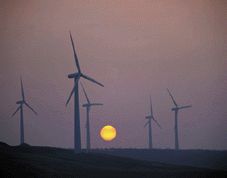
This form of clean renewable energy, which emits no air pollution, is produced using wind
turbines or windmills to create electricity. The U.S. currently has more than 1,600 megawatts of
installed capacity and produces about 3 billion kilowatt-hours of electricity each year.
Three of the largest wind farms are located in southern and central California. The wind energy
produced in California provides residents millions of kilowatt-hours of electricity every year.
The nation's largest turbine in Michigan, consisting only of propellers, a gearbox, and a generator,
saves 600 tons of coal a year. Wind farms can generate electricity for as low as 4¢ to 7¢ per kilowatt-hour.
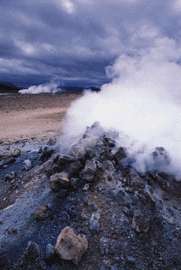 Geothermal
Deep beneath the earth's surface, hot magma heats the underlying water or steam converting it to
electricity. Geothermal resources vary in temperature. Low-to moderate temperature
(20°C to 150°C)
geothermal resources are used to provide direct heat for homes and industry, while the high temperature
(above 150°C) geothermal resources are used in electric power generation. Geothermal plants are very
economical and have minimal environmental impacts as well as produce only one-sixth of the carbon
dioxide that a natural gas fueled electrical generating power plant produces. The cost of geothermal
energy varies; it can be as low as $0.015 to 3.5 cents per kilowatt-hour.
 Biomass
Biomass plants burn organic material, such as waste, wood and agricultural and animal waste to
produce energy. This clean, renewable, and indigenous energy uses two methods to convert biomass to
electricity. Solid biomass fuels are burned in a broiler. The fuel turns to steam which is then used
to turn a turbine generator to produce electricity. The second method involves gasifying the fuels to be
burned and used as electricity. U.S. utilities use biomass to generate more than 7,500 megawatts of
electricity-enough power to meet the energy needs of several million households. Today, various forms
of biomass energy account for nearly 4 percent of all energy consumed in the US and 45 percent of
renewable energy used in the US.
 Small-scale Hydro
Transforming the energy of falling water by using hydraulic turbines generates hydroelectric power.
Hydroelectric power is classified as either large-scale or small-scale. Small-scale hydro differs
significantly from large-scale hydro in terms of its environmental impacts. Large-scale hydro plants
require the construction of dams and reservoir tanks. Large-scale hydro impacts its surrounding environment
by restricting the water flow through the use of a dam, thus restricting the fish flow, wildlife,
and affecting the entire ecosystem. Small-scale hydro facilities are positioned by rivers or canals
causing less of an environmental impact on the surrounding ecosystem. Hydroelectric plants less than
30 megawatts (MW) in size are considered small-scale hydro and qualify as a renewable resource.
Rapidly moving water is directed through tunnels to rotate turbines, creating mechanical energy.
This energy is converted to electric energy by a generator. Unlike other energy sources such as fossil
fuels, water is not destroyed during the production of electricity-it can be reused for other purposes.
|


